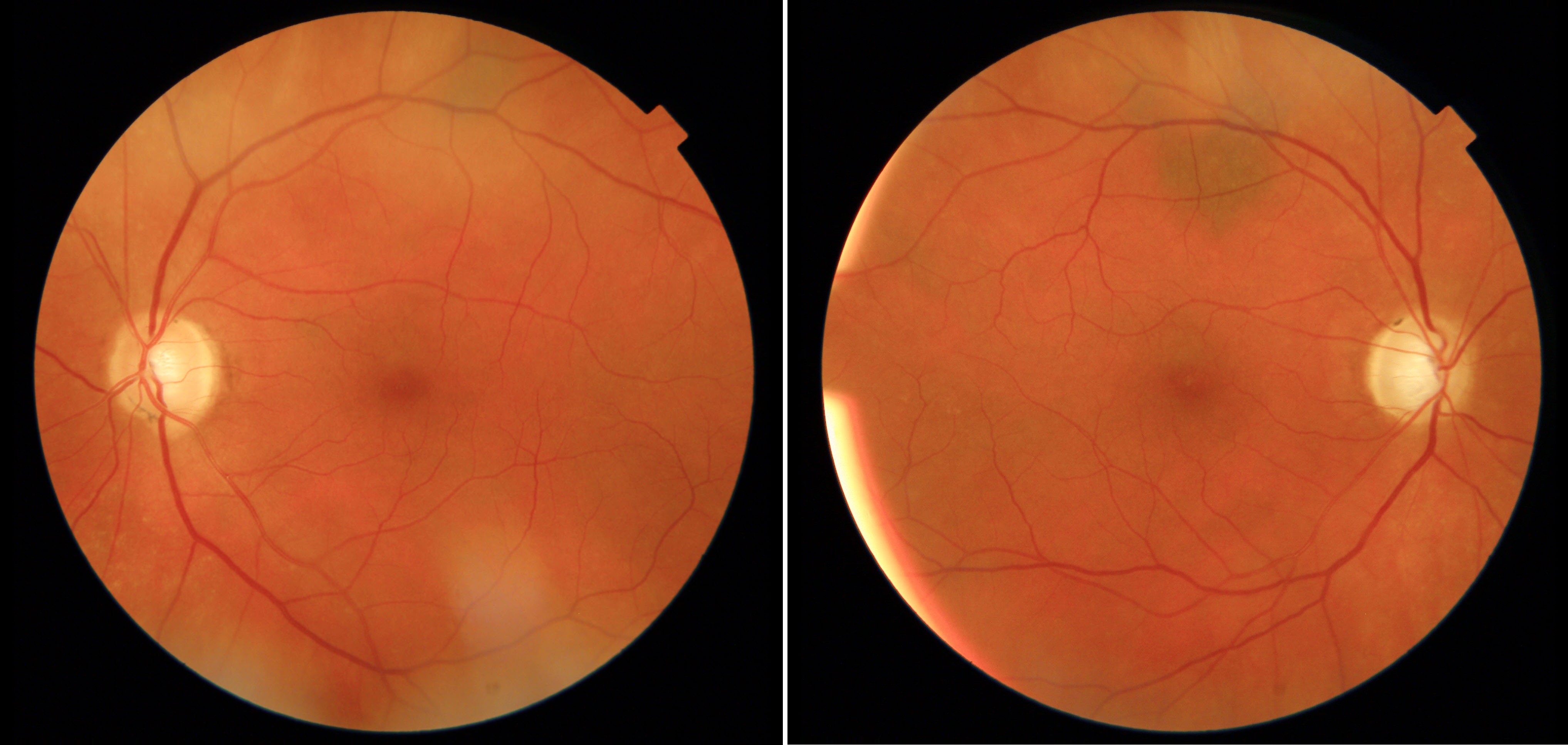
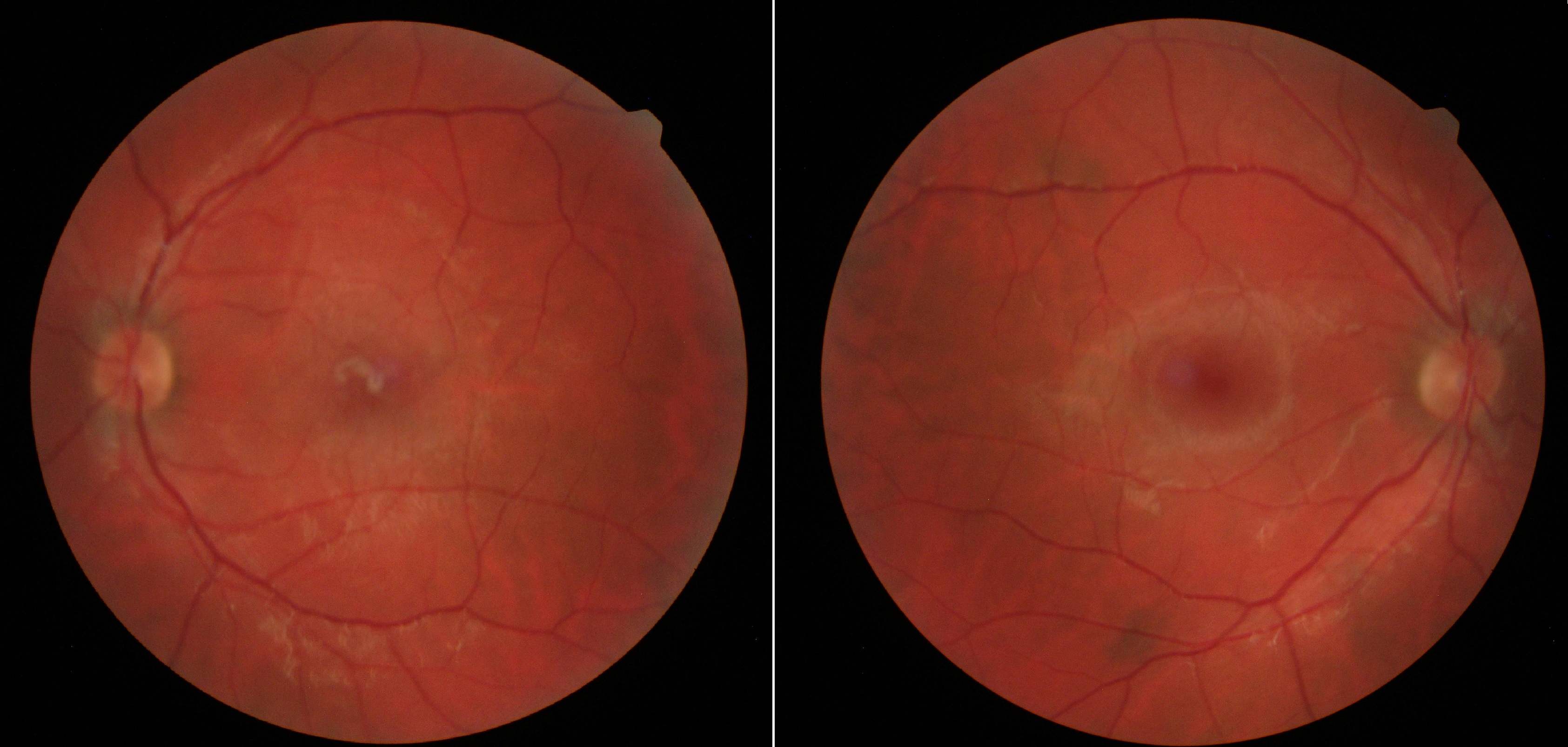
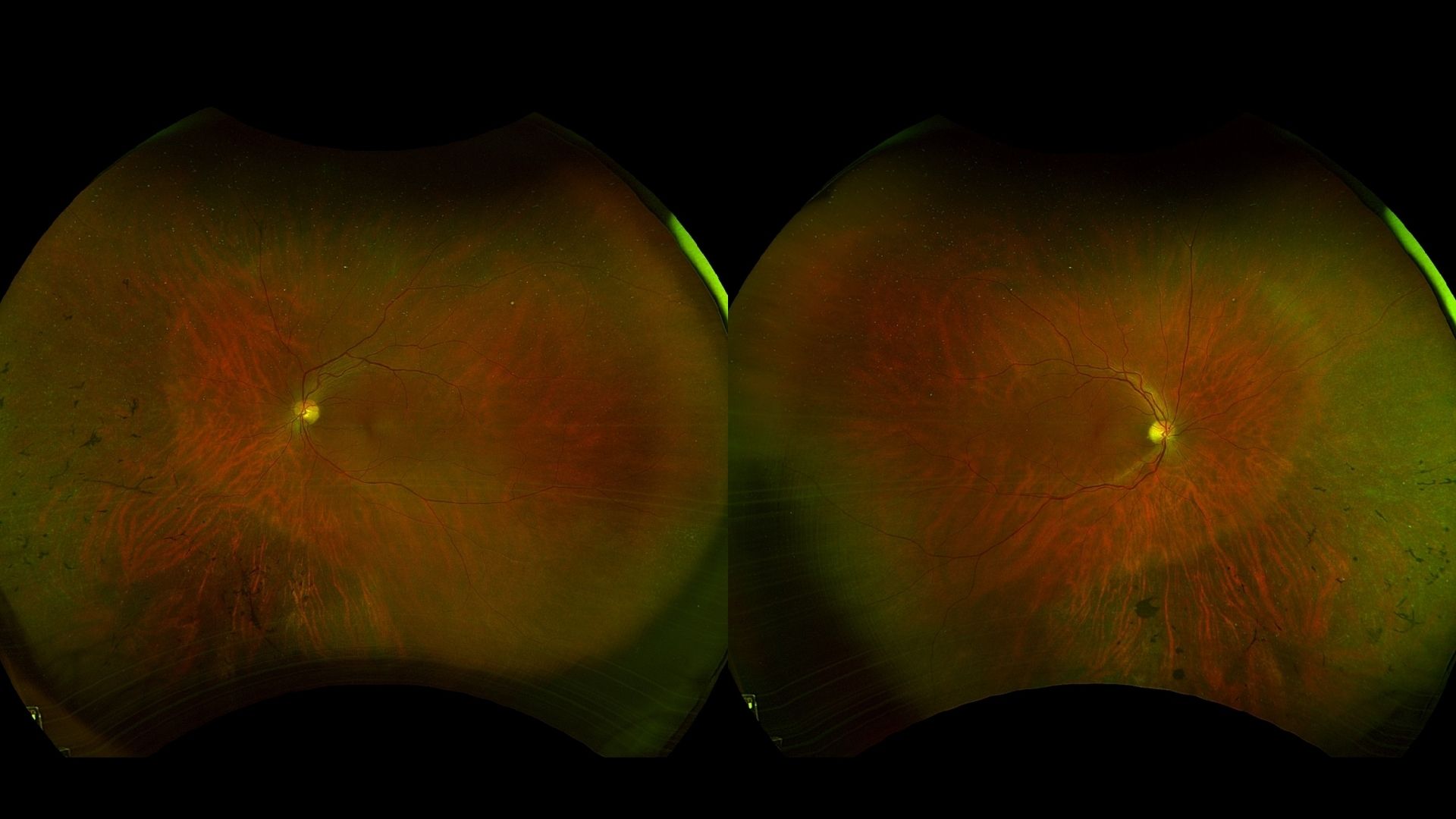
72-year-old man with 20/20 vision and trace subretinal fluid on OCT. An optometrist uploaded this case to Care1 for retinal assessment.
Case Study: Trace Subretinal Fluid With 20/20 Vision
An optometrist uploaded this case to Care1.
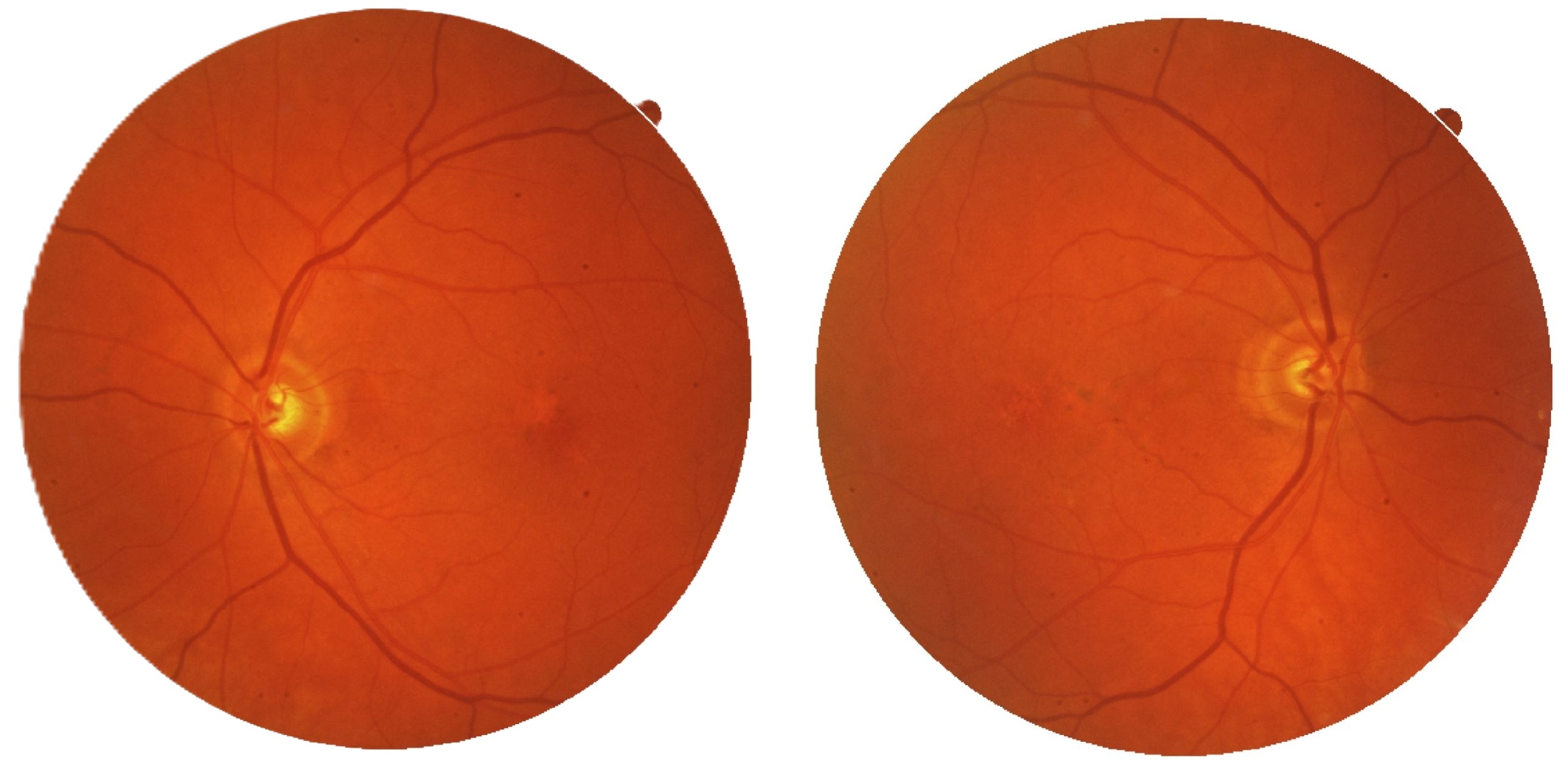
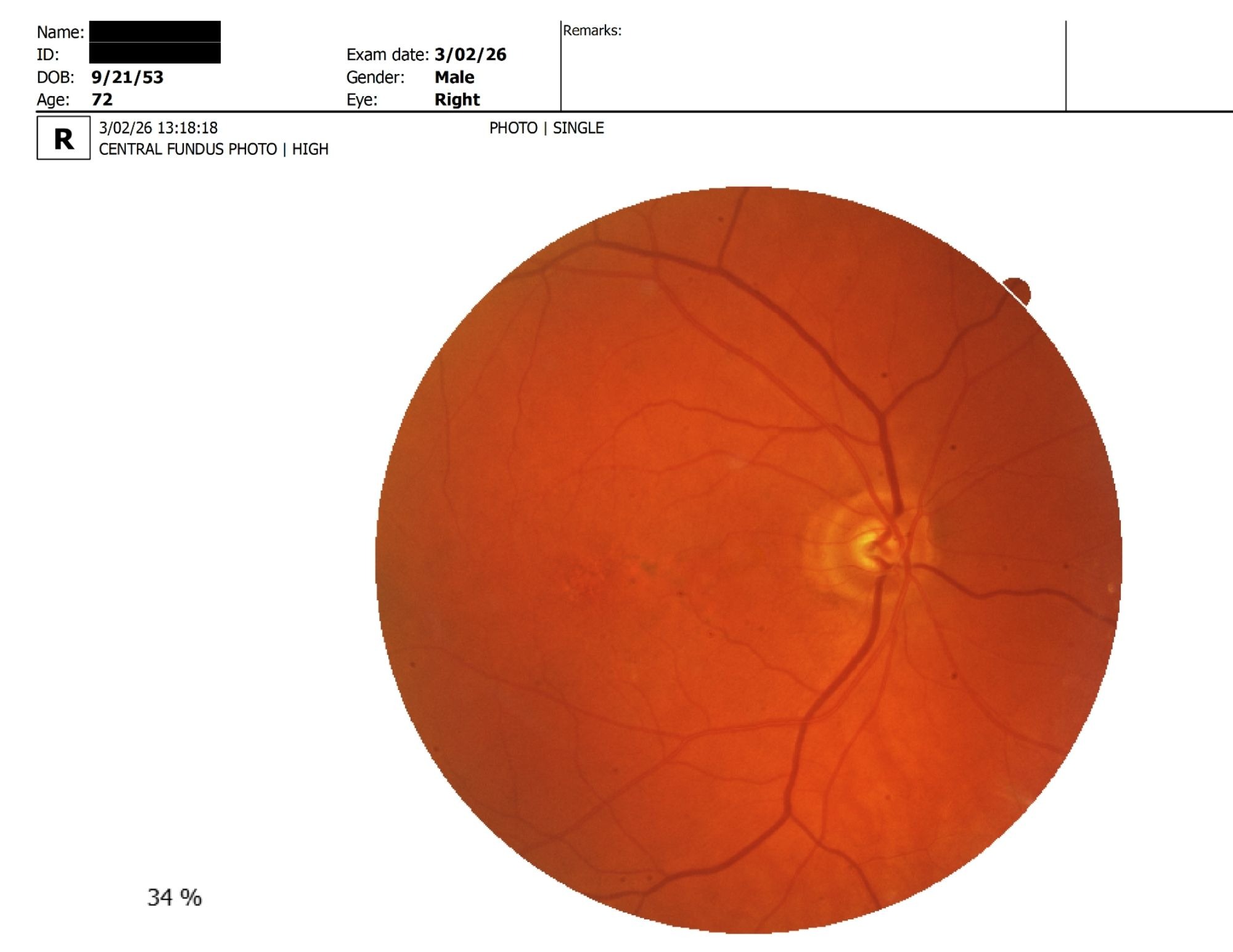
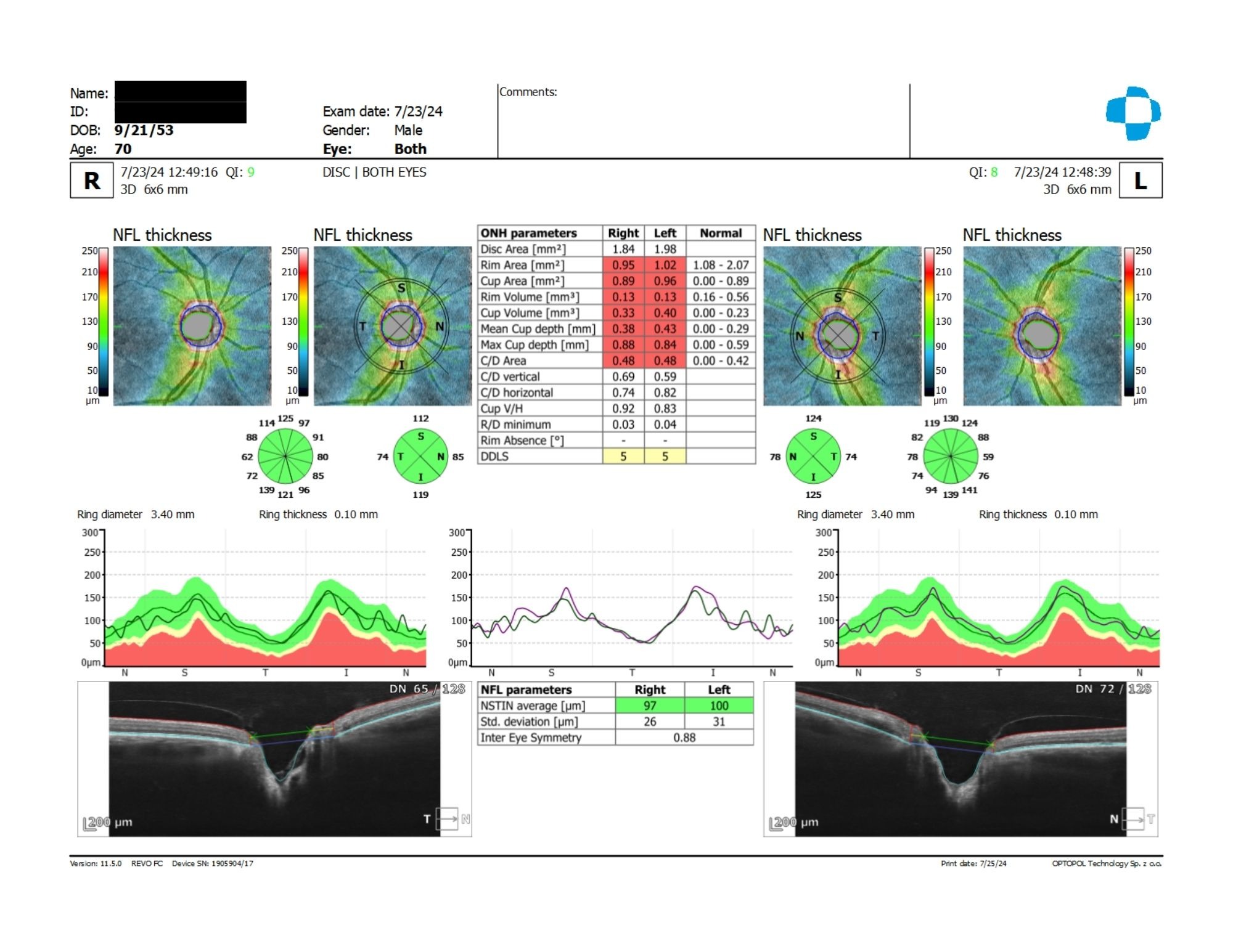
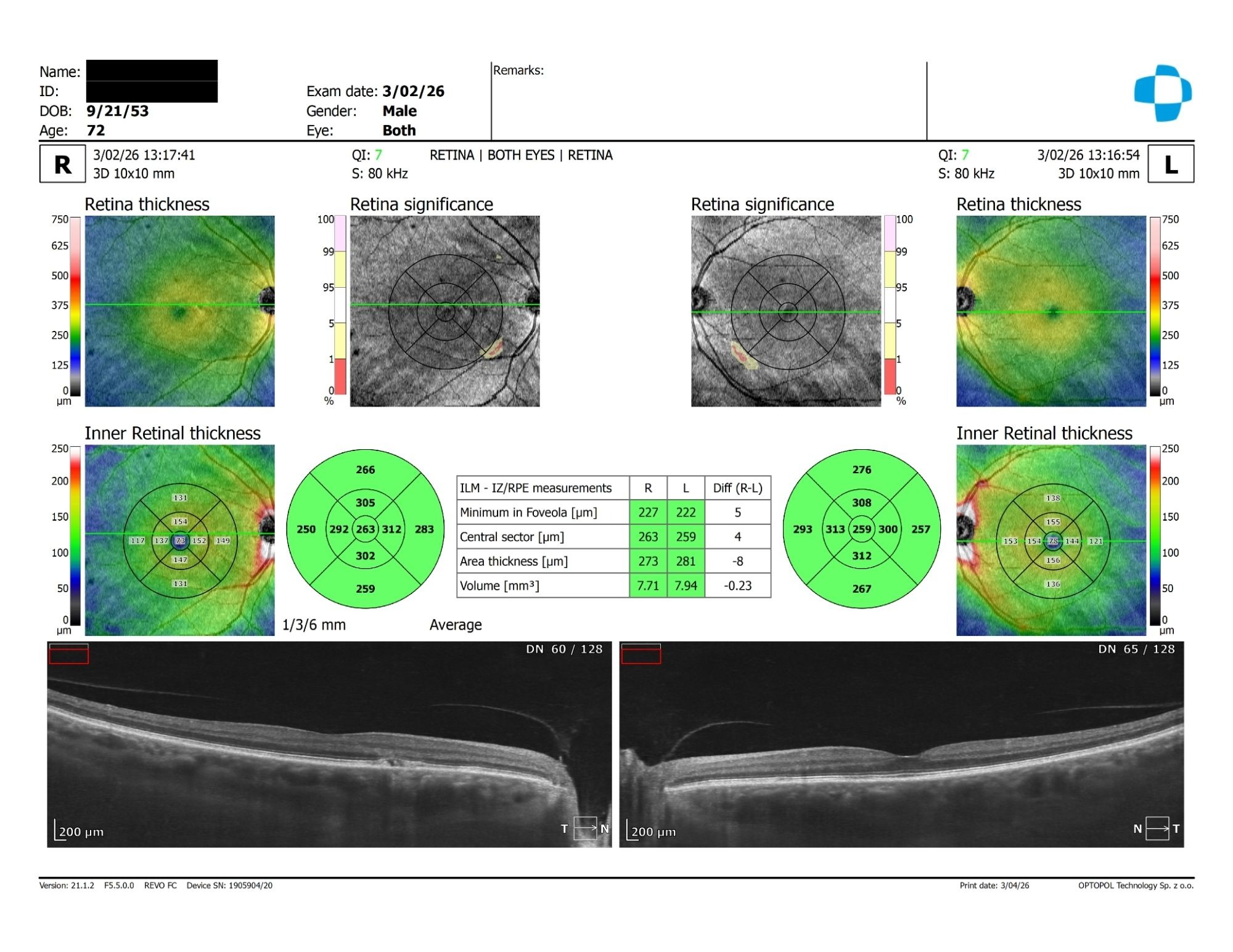
A 72-year-old man was referred for retinal review after OCT suggested possible subretinal fluid in the setting of age-related macular changes. BCVA was 20/20 OU, and IOP measured 16 mmHg OD and 15 mmHg OS. The anterior segment was notable for cataracts and blepharitis. Posterior examination showed mild to moderate macular degeneration with OCT demonstrating trace subretinal fluid and subretinal hyperreflective material in the right eye.
Should this patient be referred for an in-person retinal assessment now, or is continued monitoring appropriate?
A retina specialist provided a virtual consult within 1-2 weeks through Care1. Scroll below to see their diagnosis.
Care1 Ophthalmologist's Teleconsult
The OCT demonstrated subretinal hyperreflective material with trace subretinal fluid in the right eye. Although visual acuity remained excellent, these findings warranted an in-person retinal evaluation rather than routine monitoring alone. Careful interpretation of OCT abnormalities is essential because subtle fluid can represent early retinal pathology requiring specialist assessment.
Care1 AI's Clinical Insight
Subretinal fluid is an important OCT finding that can occur in several retinal disorders and should always be interpreted alongside clinical examination and multimodal imaging. Careful assessment of retinal morphology, associated pigment epithelial changes, and disease progression helps guide appropriate referral and follow-up. Recognition of subtle OCT abnormalities supports timely identification of potentially vision-threatening retinal disease.
Unlock your full revenue potential
✔ Specialist consults within 1-2 weeks ✔ AI-powered clinical support ✔ Greater confidence in complex decision making
Subretinal hyperreflective material on OCT has been associated with an increased risk of visual decline in several retinal diseases because it may represent a mixture of fibrin, blood, lipid, inflammatory material, or altered photoreceptor debris rather than fluid alone.
Reference: Waldstein SM, Wright J, Warburton J, et al. Predictive value of retinal morphology for visual acuity outcomes of different ranibizumab treatment regimens for neovascular AMD. Ophthalmology. 2016;123(1):60-69. doi:10.1016/j.ophtha.2015.09.013.
Clinical Pearls
Trace OCT fluid deserves careful specialist review.
Excellent vision does not exclude retinal disease.