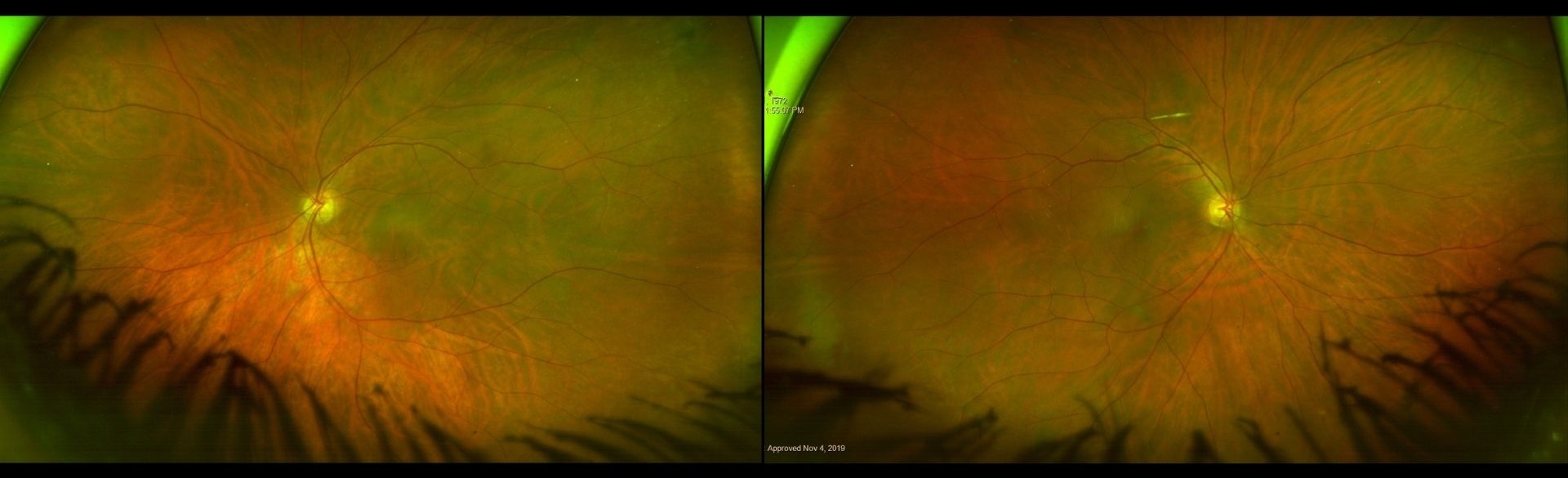
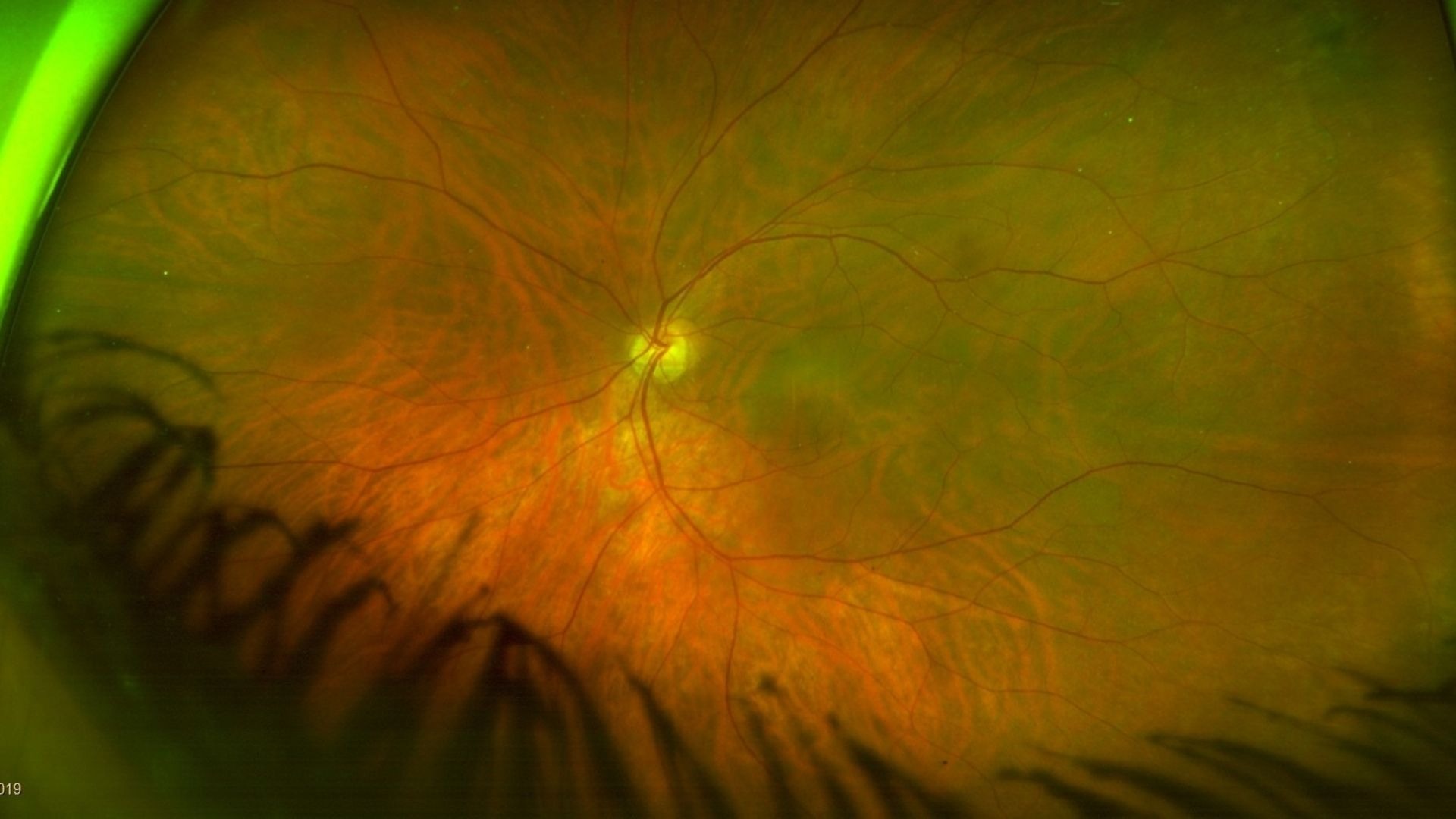
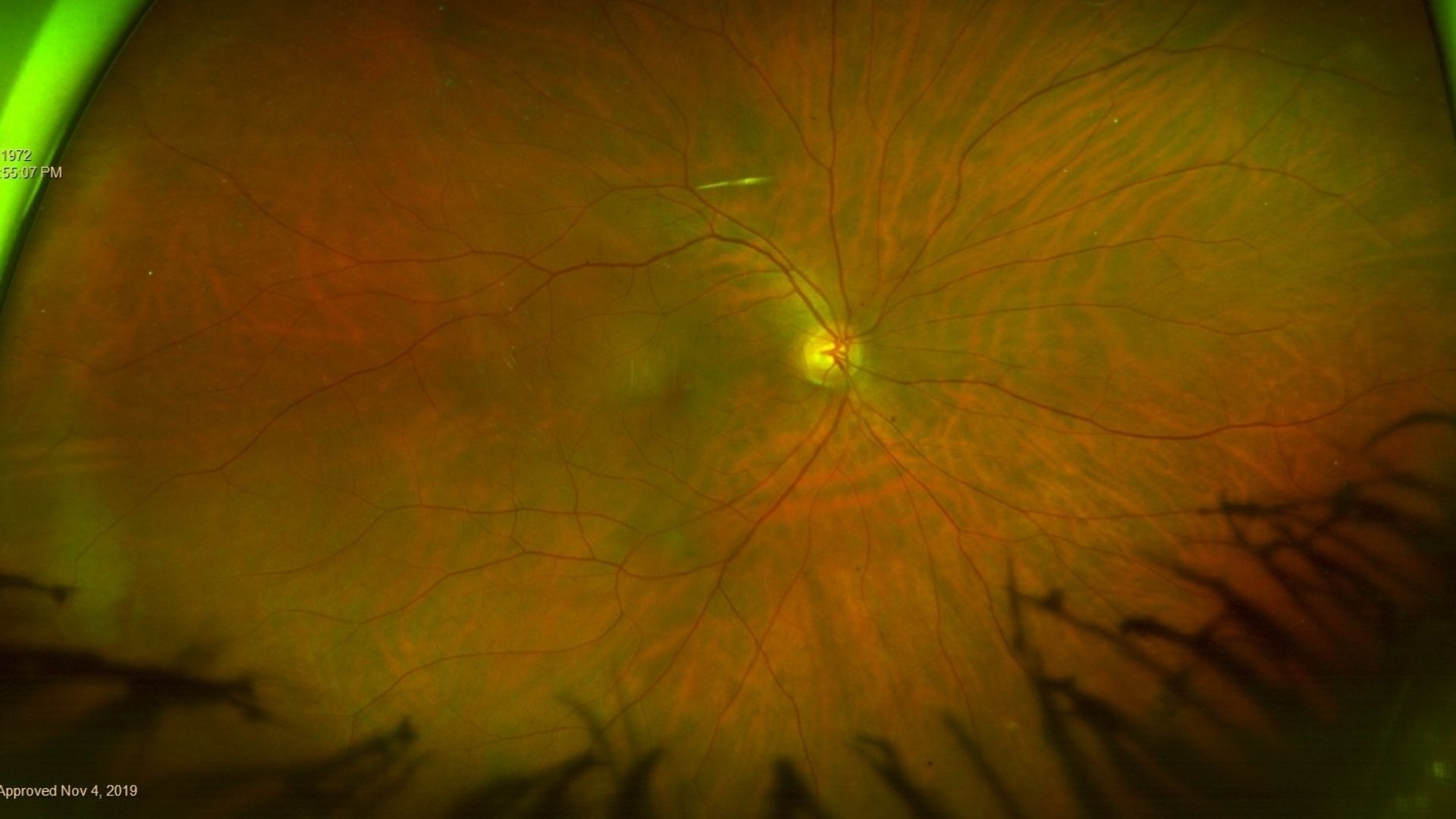
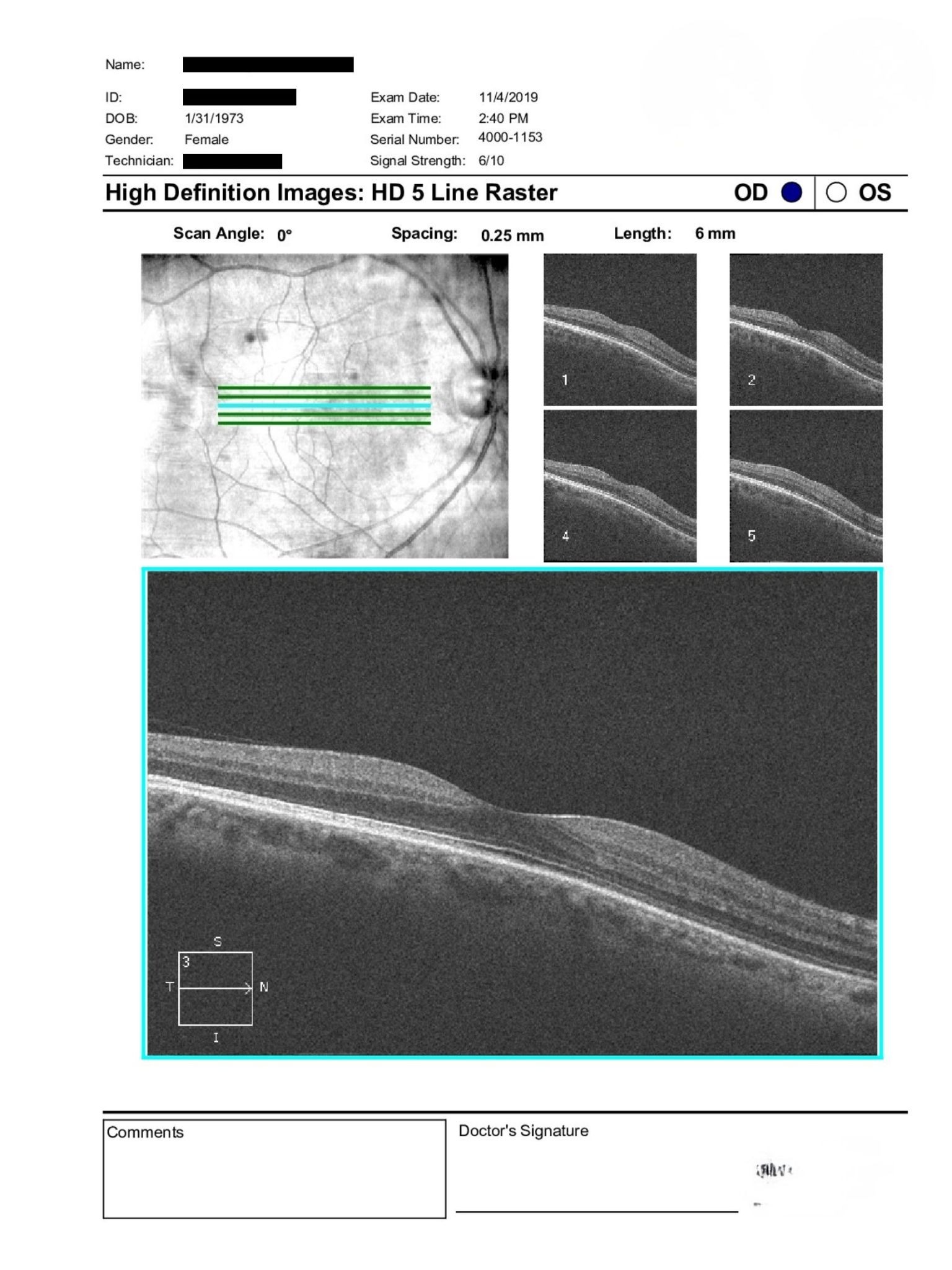
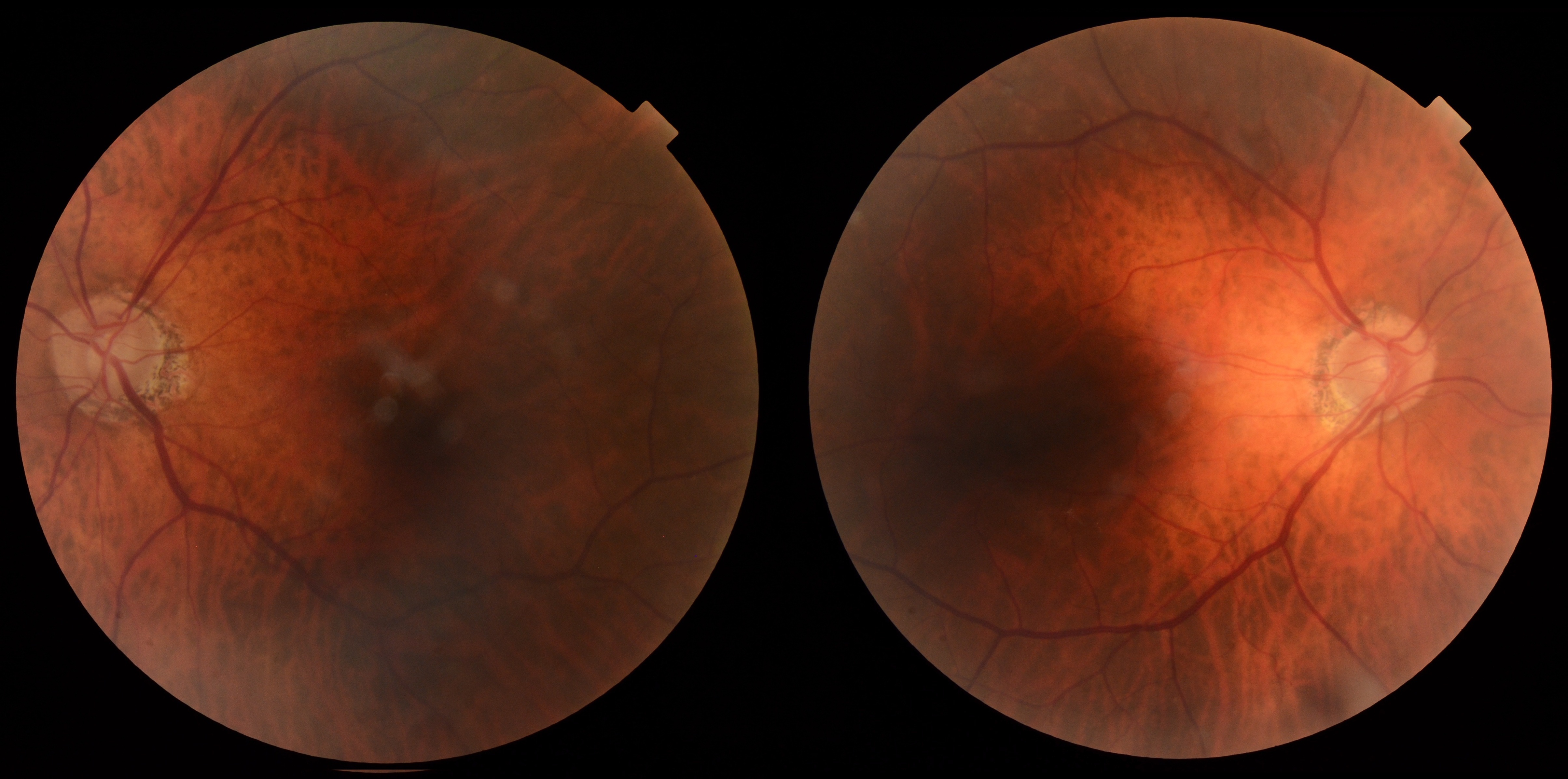
53-year-old with asymmetric cupping, normal IOP, myopia, thin corneas, and borderline OCT RNFL findings in one eye.
Case Study: Cup-to-Disc Asymmetry With Normal IOP
An optometrist uploaded this case to Care1.
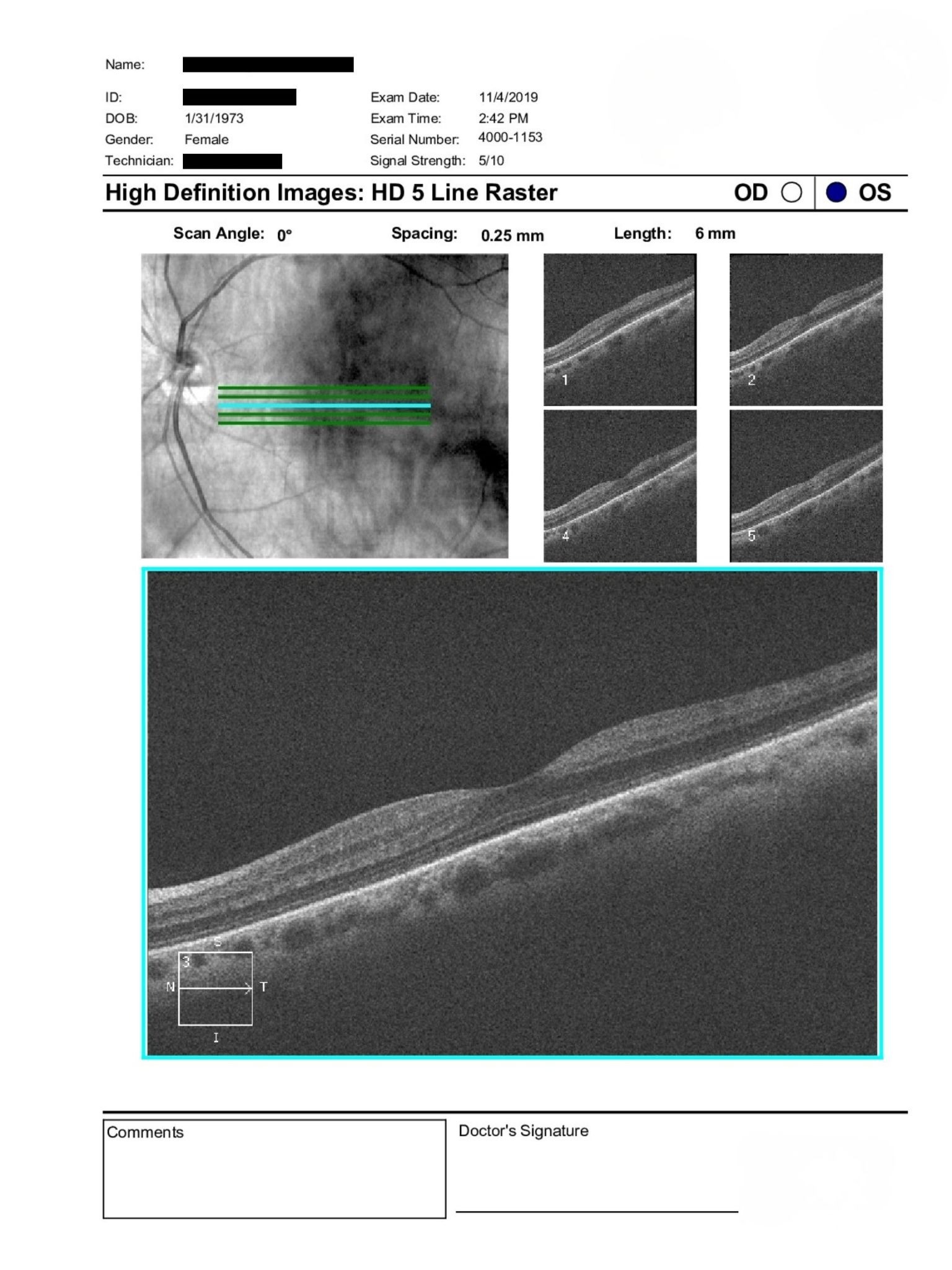
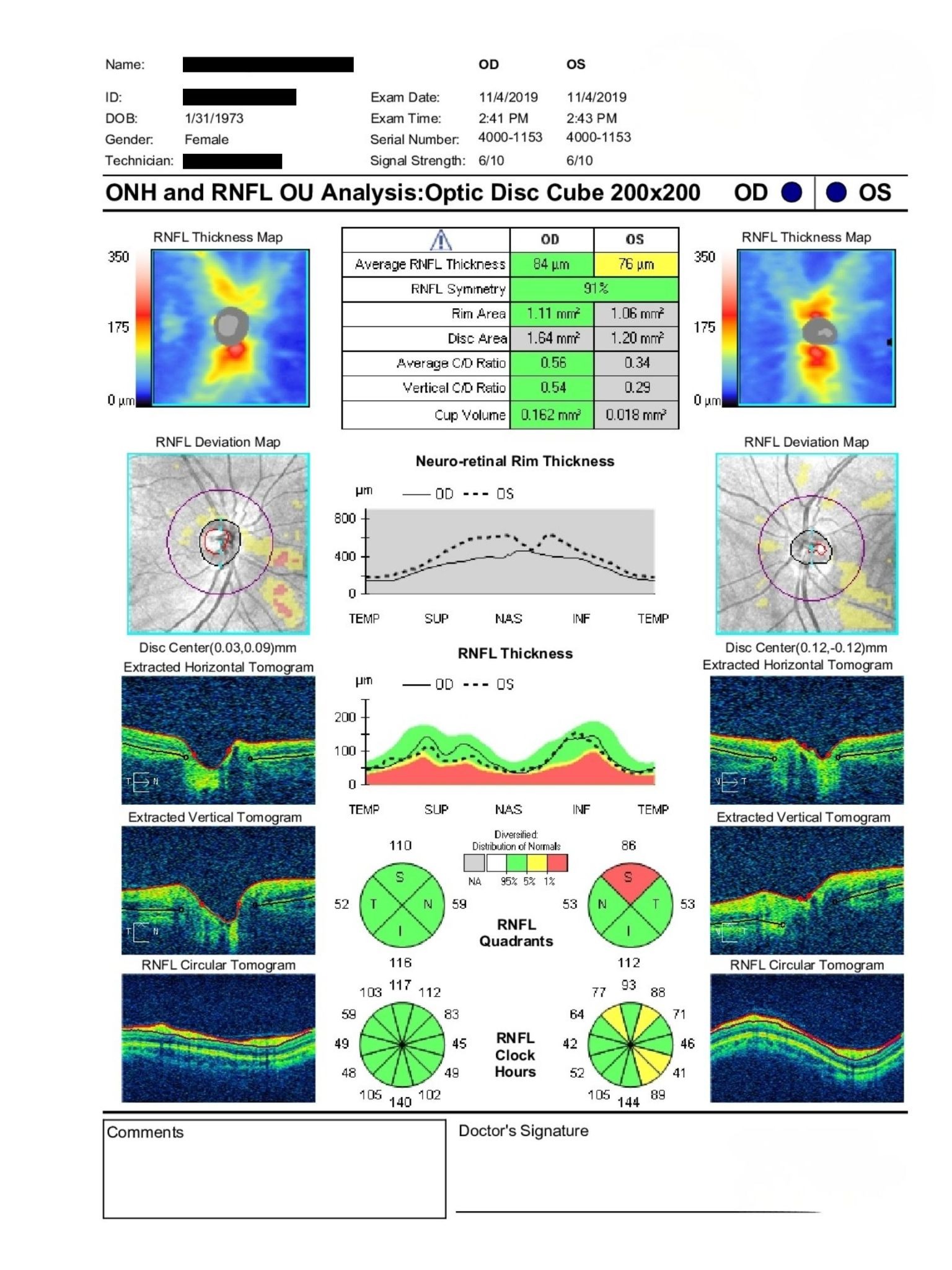
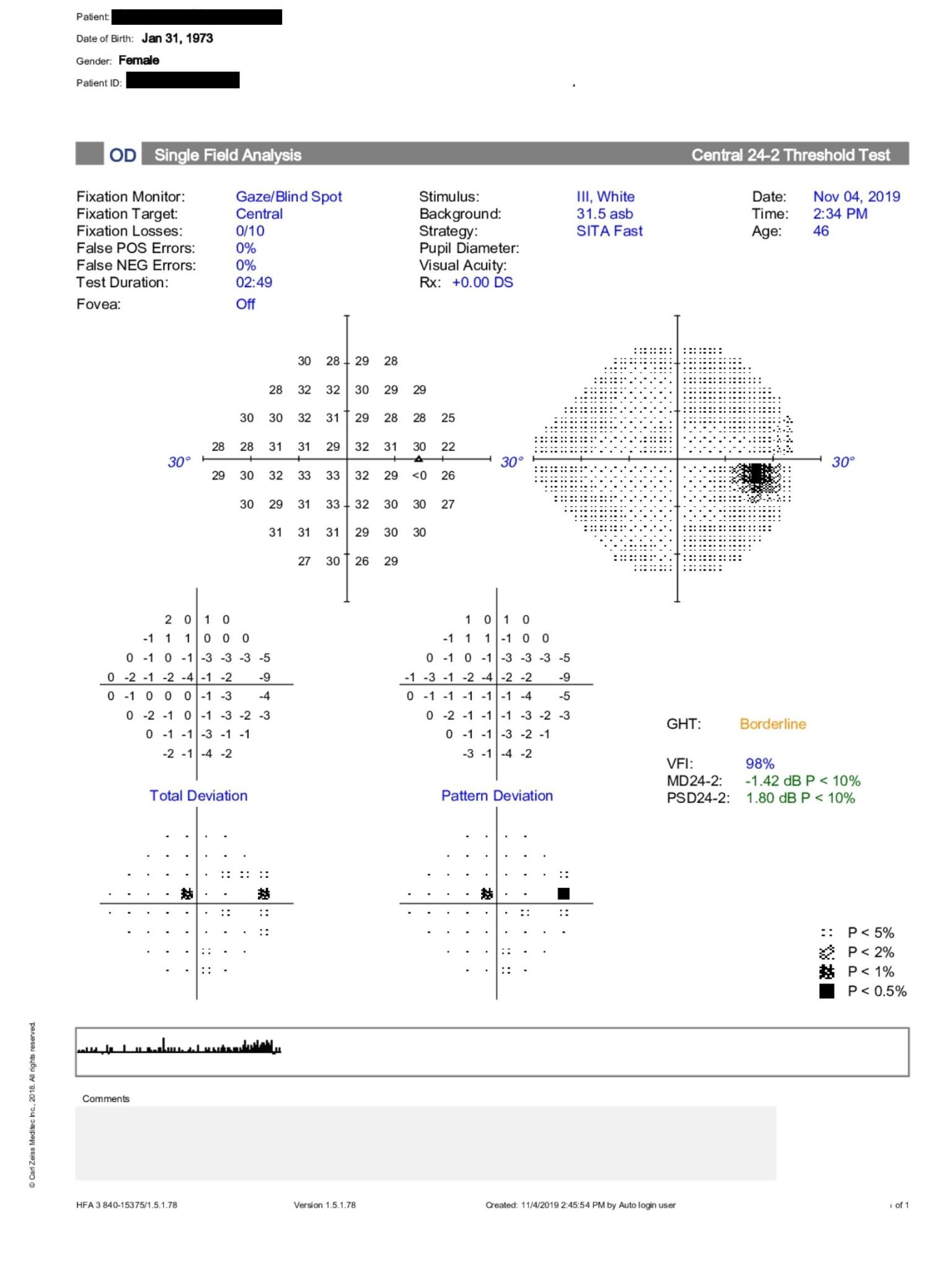
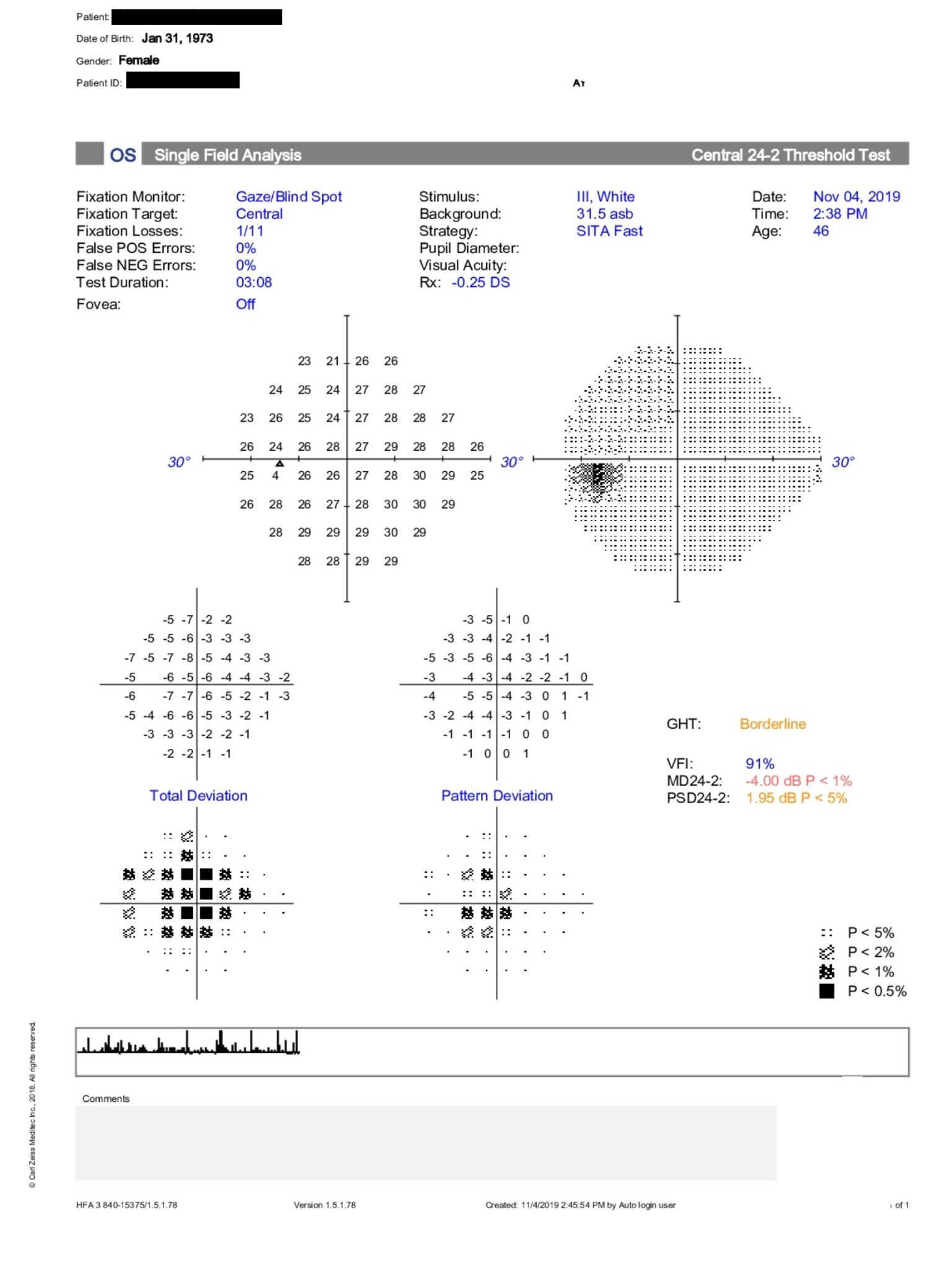
A 53-year-old patient was referred for a second opinion following asymmetric optic nerve cupping. BCVA was 20/20 OD and 20/25 OS, with baseline IOP of 14 mmHg OU. Anterior segment examination showed open angles, clear lenses, and a small central stromal corneal scar OS. Fundus examination demonstrated C/D ratios of 0.50 OD and 0.30 OS, with possible retinal edema OS. OCT RNFL and visual field testing were performed, with the visual field reported as within normal limits.
Does the combination of asymmetric cupping and borderline structural findings warrant closer monitoring despite normal IOP?
An ophthalmology subspecialist provided a virtual consult within 1-2 weeks through Care1. Scroll below to see their diagnosis.
Care1 Ophthalmologist's Teleconsult
The patient has asymmetric optic nerve cupping, with a C/D ratio of 0.50 OD compared with 0.30 OS, alongside normal baseline IOP of 14 mmHg OU. Additional features increasing clinical suspicion include thin corneas, myopia, younger age, and borderline OCT findings OS, while the visual field and IOP are reassuring.
Observation with OCT and visual field monitoring was recommended, with follow-up targeted at 6–12 months. The findings should be assessed longitudinally for structural or functional progression rather than relying on cupping asymmetry alone.
Care1 AI's Clinical Insight
Normal IOP despite suspicious cupping
EyeWiki notes that glaucoma may present with optic disc findings despite IOP that is not elevated. Cup-to-disc asymmetry, particularly asymmetry greater than 0.2, is one clinical feature that can raise suspicion. Myopia can also make optic disc assessment more challenging and may produce visual field findings unrelated to glaucomatous damage.
Practice at the highest level of medicine
✔ Specialist consults within 1-2 weeks ✔ AI-powered clinical support ✔ Greater confidence in complex decision making
In the Ocular Hypertension Treatment Study, among participants with baseline IOP above 25.75 mmHg, the 5-year risk of developing glaucomatous damage was 36% in eyes with thin or average corneas compared with 13% in eyes with CCT of 565–588 µm.
Reference: Gordon MO, Beiser JA, Brandt JD, et al. The Ocular Hypertension Treatment Study: baseline factors that predict the onset of primary open-angle glaucoma. Archives of Ophthalmology. 2002;120(6):714–720. doi:10.1001/archopht.120.6.714.
Clinical Pearls
Assess C/D asymmetry alongside OCT and visual fields.