See Years of OCT RNFL Changes at a Glance with AI
Reviewing OCT RNFL scans is essential for glaucoma management but identifying long-term change shouldn’t require flipping through years of reports.
Is superior or inferior RNFL thinning a sign of progression, or has it remained stable over time?
Traditionally, answering this requires opening multiple OCT RNFL scans, comparing current and previous testing and mentally tracking change across visits. This process is time-consuming and increases the risk of misinterpreting findings.
Why Long-Term OCT RNFL Trend Analysis Matters
Glaucoma progression is rarely determined by a single scan. Clinicians need to understand how retinal nerve fiber layer thickness changes over time to make confident treatment decisions.
Without efficient longitudinal visualization, subtle progression may be missed or stable findings may appear concerning when viewed in isolation.
How Care1 Uses AI to Analyze OCT RNFL Over Time
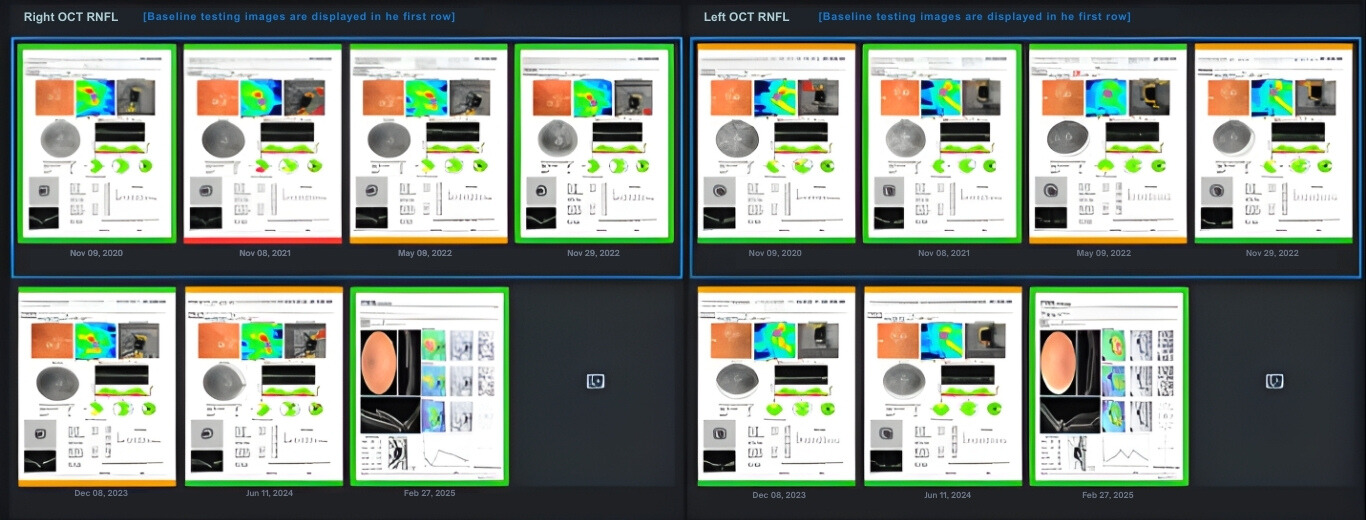
Care1 applies artificial intelligence to automatically interpret color-coded OCT RNFL data across visits.
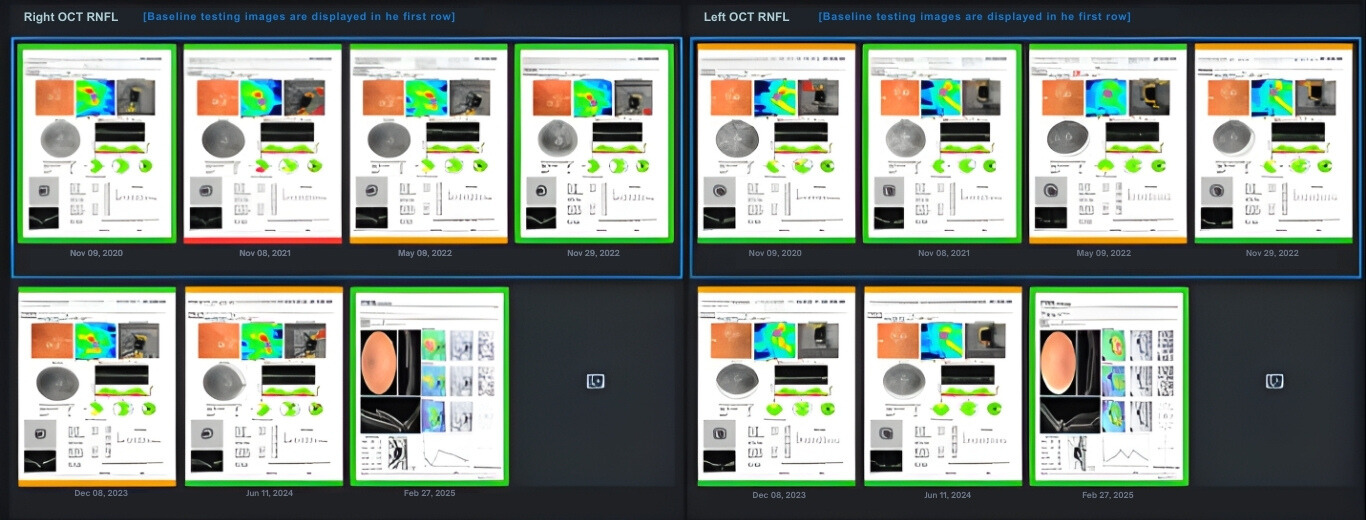
Each OCT RNFL scan is analyzed, and the border of the RNFL image is color-coded based on the results of the imaging. When viewed longitudinally, clinicians can instantly identify whether RNFL thinning is:
- Stable
- Intermittent
- Progressive
This allows meaningful patterns to emerge within seconds without the need for manual comparison.
Identifying Stability vs Progression in Glaucoma Patients
In many patients, RNFL thinning may appear intermittently over several years without true progression.
By visualizing RNFL trends across time, Care1 helps confirm stability in these cases, reducing unnecessary concern and supporting more accurate clinical decisions.
Centralized Image Management for Glaucoma and Retina Care
Care1 is designed to support long-term disease monitoring, allowing clinicians to store and track:
- Intraocular pressure (IOP)
- Visual acuity (VA)
- OCT RNFL
- OCT macula
- Visual fields
- Fundus photography
All data is accessible in one platform, making longitudinal review faster and more intuitive.